Loading…
Subject: Concurrency clear filter
arrow_back View All Dates
Monday, September 14
 

11:00 MDT

From Firmware to Screen: Real-Time Control, Simulation, and Visualization in C++23 With CUDA and Unreal Engine
Monday September 14, 2026 11:00 - 12:00 MDT
What does it take to build a real-time embedded control system in modern C++, simulate its environment, command it from a browser, and watch it fly in 3D — all from the same open source ecosystem? This talk follows that pipeline end-to-end: from a C++23 real-time framework that schedules deterministic control loops across POSIX hosts and bare-metal microcontrollers, to GPU-accelerated simulation with CUDA, to web-based operations and telemetry, to live 3D visualization in Unreal Engine.

Attendees will see how a unified runtime architecture can span embedded control, simulation, diagnostics, operations, and visualization without fragmenting into separate software stacks. The talk explores deterministic scheduling, zero-allocation real-time design, cross-platform deployment, and integrating CUDA compute kernels directly into scheduled control loops without blocking execution. It also covers tooling for validating deterministic real-time behavior, along with techniques for streaming telemetry and sensor data between simulation and visualization layers in real time.

The presentation includes live demonstrations of a quadcopter simulation flying a programmed trajectory with lidar feedback, and a full-fidelity aircraft simulation with closed-loop autopilot, engine dynamics, and atmospheric turbulence — both running through the same real-time framework and rendered live in Unreal Engine. Whether you build flight software, robotics systems, industrial controllers, or simulation infrastructure, this talk presents practical architectural patterns for modern real-time systems in C++ that bridge embedded devices, GPU compute, and interactive visualization.

Presenters
KG

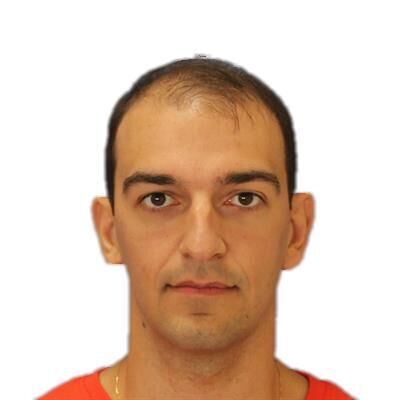
Kevin Gomez

Flight Software Engineer, Lux Aeterna
Monday September 14, 2026 11:00 - 12:00 MDT
Red Rock 8/9

11:00 MDT

Same Bits Without Losing MIPS: Reproducible Numerics at Full Hardware Speed
Monday September 14, 2026 11:00 - 12:00 MDT
Floating point has a reputation for betrayal. Change the thread count, vector width, compiler flags, reduction tree, or target architecture, and the low bits can move. Parallel algorithms make this worse: the standard often specifies the operation, but not the numerical expression whose result must be reproduced. This talk asks a provocative question: what if reproducible numerics did not have to be slow?

We will show reproducible, deterministic implementations of reduce and scan that exhibit better error behavior on hostile floating-point workloads and can match or beat conventional standard-library implementations on realistic workloads. The trick is not to freeze the execution schedule. It is to specify the expression being computed, then let the implementation use SIMD, threading, blocking, tiling, and platform-specific strategies to compute that expression efficiently.

The key idea, developed through C++ standardization work such as P4016R0 and P4229R0, is reproducibility by reproducing the computation. Instead of asking the implementation to promise a particular schedule, we give the calculation a named expression. Once that expression is chosen, changing the thread count, vector width, chunking, or blocking strategy does not silently change the answer.

A reproducible scan makes this harder than reduce because it does not expose only one final value. It exposes every prefix. A reproducible final sum is not enough if the intermediate results still drift. We will show how expression and observation contracts make those prefixes reproducible without forcing the computation back into a slow sequential order.

Then we go below the algorithm layer, to the places where bits usually escape: FMA contraction, denormals, floating-point environment choices, math-library approximations, and vectorized transcendental functions. The goal is not to get the same answer by turning off the hardware. We will show reproducible vectorized primitives, including transcendental functions, running at speeds comparable to established vector math libraries while preserving a cross-platform numerical contract.

Finally, we put the whole stack under stress: a heterogeneous numerical pipeline across x86-64, Apple Silicon, and CUDA. The data is deliberately hostile, with high cancellation rates and fragile intermediate states. The aim is not to pass friendly benchmark cases, but to reproduce the specified computation, including the same intermediate failures, not just the same final answer, bit for bit, across CPUs, GPUs, and toolchains.

Presenters
avatar for Andrew Drakeford

Andrew Drakeford

Numerical Ghost Slayer, Determinus Labs
Andrew Drakeford has a PhD in Physics and began developing C++ applications in the early 1990s at British Telecom Laboratories. For the past two decades, he has worked in finance, building high-performance calculation libraries and trading systems in C++.His current focus is making... Read More →
Monday September 14, 2026 11:00 - 12:00 MDT
Homestead 3/4

15:15 MDT

std::simd Without Compromise: SIMD in C++26 and Beyond, as Fast as Silicon Allows
Monday September 14, 2026 15:15 - 16:15 MDT
For thirty years, SIMD has been the preserve of experts. Writing the fastest C++ has meant hand-written intrinsics, locking code to one architecture, and parallel implementations maintained across every instruction set you ship to. Auto-vectorization can help, but optimizers may give up in complex scenarios where iteration independence isn't obvious. C++26 changes that by putting SIMD in the hands of every C++ programmer, bringing portable, expressive data parallelism into the standard library.

For the engineers who have spent decades writing intrinsics in telecoms, finance, HPC, and embedded systems, migration to std::simd is only worthwhile if it preserves the performance they have fought to achieve. Every cycle counts when code runs tens of thousands of times per second, for years on end, and a portable abstraction that costs ten percent is not a win. The bar for adoption is therefore high: the abstraction must be measurably cheap, the generated code must match hand-written intrinsics, and the tricks and techniques those engineers rely on must all be expressible in the library, not lost in translation.

This talk takes the practitioner's view, aimed squarely at the engineers who write real intrinsics code today and need to know whether std::simd can replace it. It starts with what modern SIMD hardware actually offers, grounding std::simd in real silicon. It then works through the main features of C++26's std::simd with worked examples drawn from the patterns that recur in production intrinsics code, accessible to programmers new to the library and detailed enough for intrinsics veterans to map against their own kernels with all their accumulated tricks and techniques. A look under the hood at our implementation shows how careful API design and aggressive use of hardware features make the abstraction as cheap as the target architecture allows, and how the library fills the gaps on weaker targets with implementations that an expert library author can write once on behalf of every user. The talk closes with a preview of the C++29 proposals being written now to close the remaining gaps, so that std::simd becomes a clear win even for the most performance-critical code.

Presenters
avatar for Ruslan Arutyunyan

Ruslan Arutyunyan

Senior Middleware Development Engineer, Intel
Ruslan is a Senior Middleware Development Engineer specializing in parallel and threading runtimes. He joined Intel in 2017 and has experience in the autonomous driving domain, where he led the development of two libraries. Currently, Ruslan is the lead developer of oneAPI DPC++ library... Read More →
avatar for Daniel Towner

Daniel Towner

Principal Software Engineer, Intel
Dr Daniel Towner is a Principal Systems Engineer at Intel, where he has spent the last two decades helping telecoms software extract every last cycle from modern hardware. With 25 years in the industry behind him, including 12 years as a GCC port maintainer, he now splits his time... Read More →
Monday September 14, 2026 15:15 - 16:15 MDT
Colorado B

15:15 MDT

The Latency Slippage: Understanding the Hidden Costs of Caching for Low Latency C++
Monday September 14, 2026 15:15 - 16:15 MDT
Choosing cache-friendly data structures is a well-known optimization, but it's rarely the whole story. This talk goes deeper, exploring the hardware mechanics that dictate real-world performance and showing where significant gains are still left on the table.

We'll start from the ground up: what actually happens inside the cache hierarchy when your code issues a memory read or a software prefetch? Understanding the hardware lets us answer, when you should prefetch manually, and when you should trust the hardware prefetcher.

From there, we'll examine the invisible cost of multi-core C++. Cache coherency protocols (MESI/MOESI) can silently degrade performance through false sharing, RFO stalls, and coherency storms. We'll walk through how to diagnose these issues using hardware performance counters and how to eliminate them.

Additionally, we will contrast these behaviors across the data cache (DCache) and instruction cache (ICache), and analyze how Translation Lookaside Buffers (TLBs) impact overall memory read latency.

Finally, we'll tie it all together by combining hardware insight with application profiling data to arrive at practical strategies for low latency C++, packaged as an application-aware memory allocator.

Presenters
avatar for Sanchit Gupta

Sanchit Gupta

Low Latency C++ Developer, Graviton Research Capital
Sanchit Gupta graduated from Indian Institute of Technology, Madras with Honours in Bachelors of Technology in Computer Science and Engineering. Since graduating, Sanchit has worked for Graviton as a Low latency Software Developer
Monday September 14, 2026 15:15 - 16:15 MDT
Colorado A
 
Share Modal

Share this link via

Or copy link

Filter sessions
Apply filters to sessions.
Filtered by Date -