Loading…
Venue: _3 clear filter
arrow_back View All Dates
Monday, September 14
 

11:00 MDT

Back to Basics: Move Semantics
Monday September 14, 2026 11:00 - 12:00 MDT
Move semantics and perfect forwarding, introduced in C++11, are quite impactful features that still remain a source of confusion even for some experienced developers. This talk builds understanding from the ground up: what problem move semantics solves, how rvalue references enable it, and why the rules work the way they do.

We start with the cost of unnecessary copies and how move constructors and move assignment operators let us transfer resources instead of duplicating them. We then look at how std::move doesn't actually move anything — and what it really does. From there we tackle the forwarding problem: why writing a single function that preserves the value category of its arguments is necessary, how forwarding references (also known as "universal reference" in the past) solve it, and what std::forward does under the hood.

Along the way we cover the practical details that trip people up: reference collapsing rules, the interaction between overload resolution and reference binding, when the compiler generates move operations and when it doesn't, and the cases where std::move can actually pessimize your code. We also discuss trade-offs in parameter passing — by value, by const reference, or by forwarding reference — so attendees should have a clearer model for making these decisions in their own code.

At the end we will look into std::forward_like and explore how it is different from std::forward .

No prior knowledge of rvalue references is assumed. Familiarity with copy constructors, destructors, and basic templates is helpful.

Presenters
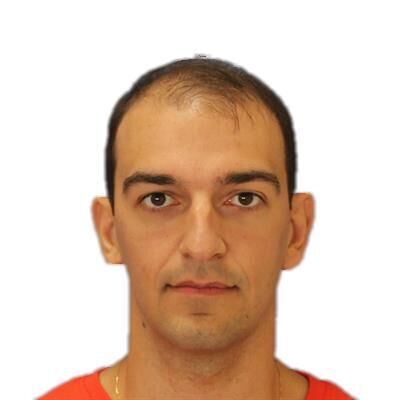
avatar for Ruslan Arutyunyan

Ruslan Arutyunyan

Ruslan is a Senior Middleware Development Engineer specializing in parallel and threading runtimes. He joined Intel in 2017 and has experience in the autonomous driving domain, where he led the development of two libraries. Currently, Ruslan is the lead developer of oneAPI DPC++ library... Read More →
Monday September 14, 2026 11:00 - 12:00 MDT
_3

14:00 MDT

Back to Basics: Templates
Monday September 14, 2026 14:00 - 15:00 MDT
C++ templates are one of the language’s most powerful yet often misunderstood features. This talk walks the audience through the entire template landscape, starting with the basic syntax and definition, moving through function and class templates, and culminating in advanced techniques.

Attendees will learn how template argument deduction works, why implicit requirements matter, and how explicit specialization can replace error-prone macro tricks. Real-world examples, including a flexible register abstraction used in production code, show how generic programming can deliver type-safe, high-performance solutions without sacrificing readability and performance (zero cost abstraction).

By the end of the session, participants will feel confident writing their own generic components, understand the trade-offs of different template features, and have a toolbox of best-practice patterns they can apply immediately to their projects.

Presenters
avatar for Laurent Carlier

Laurent Carlier

Lead embedded software engineer, Laurent Carlier Consulting
Laurent Carlier is a freelance embedded software consultant and Development Lead Embedded Software Engineer at KION, where he works on autonomous mobile robots and automated vehicles for warehouse logistics. He has over a decade of industry experience, having spent nine years at Nokia... Read More →
Monday September 14, 2026 14:00 - 15:00 MDT
_3

15:15 MDT

Back to Basics: Code Analysis
Monday September 14, 2026 15:15 - 16:15 MDT
In the C++ ecosystem, we have powerful tools for understanding our programs before, during, and after they run. But compiler warnings, clang-tidy, cppcheck, sanitizers, debuggers, profilers, and coverage tools all answer different questions, and using them well starts with knowing which question you are asking.

This talk introduces code analysis from first principles. We will compare static techniques such as compiler diagnostics, linting, and include analysis with runtime techniques such as sanitizers, coverage instrumentation, and profiling. We will also briefly connect these tools to the direction of modern C++, including C++26 contracts and standard library hardening, where some assumptions that used to live only in comments, documentation, or debug modes become part of the program's checkable structure. Through small C++ examples, we will see what each category of tool can reveal, what it cannot prove, and how the tools complement each other.

Attendees will leave with a practical mental model for choosing the right analysis tool for the task at hand, interpreting its output, introducing analysis into an existing C++ codebase, and writing code that is easier for both humans and tools to understand.

Presenters
avatar for Alexsandro Thomas

Alexsandro Thomas

Senior Software Engineer, Zivid
Alexsandro Thomas is a Senior Software Engineer at Zivid AS specializing in C++ API development, build systems, and developer tooling. His interests include GPGPU, compiler technology, and low-level programming. In his free time he enjoys studying programming and natural languages... Read More →
Monday September 14, 2026 15:15 - 16:15 MDT
_3

16:45 MDT

Back to Basics: Lambdas, Function Objects, and std::function
Monday September 14, 2026 16:45 - 17:45 MDT
C++ gives us at least four different ways to pass "a thing that can be called" from one piece of code to another: function pointers, function objects, lambdas, and type-erased wrappers like std::function . Modern C++ has added more — generic lambdas, deducing-this lambdas, std::move_only_function , and a healthy ecosystem of concept-constrained callable parameters. Each of these has a job it is good at and several jobs it is bad at, but they are often used interchangeably until something breaks.

We will start with the basics: what a callable actually is, how function pointers, function objects, and lambdas relate to one another, and how the compiler thinks about each of them. We will look at lambda capture rules in detail — by-value, by-reference, init captures, dangling captures, and the cases where well-meaning developers reach for [=] or [&] and ship a bug — and we will see how generic lambdas (C++14) and deducing-this lambdas (C++23) extend the model without giving up clarity.

From there we will turn to the question of how to store and pass callables. We will compare function pointers, std::function , std::move_only_function (C++23), and concept-templated callable parameters along the axes that actually matter: ownership, allocation, move-only support, performance, and what the API tells the reader. Examples will be drawn from issues that have come up writing production code and mentoring developers — including the kind of subtle ABI and lifetime bugs that hide behind a perfectly reasonable-looking std::function<void()> parameter.

We will conclude with recommendations for which tool to reach for in which situation, with reference to the C++ Core Guidelines where useful. Attendees will leave with a clearer mental model of callables in modern C++ and a defensible default for the next time they write a function that takes one.

Presenters
avatar for Roth Michaels

Roth Michaels

Principal Software Engineer, Native Instruments
Roth Michaels is a Principal Software Engineer at Native Instruments, an industry leader in real-time audio software for music production and broadcast/film post-production. In his current role he is involved with software architecture and bringing together three merged engineering... Read More →
Monday September 14, 2026 16:45 - 17:45 MDT
_3

 
Share Modal

Share this link via

Or copy link

Filter sessions
Apply filters to sessions.
Filtered by Date -