Loading…
Venue: _5 clear filter
arrow_back View All Dates
Wednesday, September 16
 

09:00 MDT

Deterministic Storage: Building a Predictable Embedded File System in Modern C++
Wednesday September 16, 2026 09:00 - 10:00 MDT
Embedded systems often operate under strict timing and reliability constraints, yet most existing file systems prioritize throughput and flexibility over predictability. This mismatch can lead to non-deterministic behavior, unbounded latency, and difficult-to-debug failures in resource-constrained environments. In resource-constrained environments such as automotive control units and aerospace flight systems.

This talk explores the design and implementation of a deterministic file system built specifically for embedded systems using modern C++. Rather than focusing on feature completeness, the system prioritizes predictable behavior through fixed block allocation, metadata-first layouts, and bounded operation times.

We will examine how determinism can be treated as a first-class design constraint, influencing everything from on-disk structure to API design. The talk will also highlight how modern C++ features—such as strong typing, RAII, and compile-time configuration—can be leveraged to enforce correctness and reduce runtime overhead without sacrificing clarity.

Attendees will gain insight into real-world tradeoffs required to achieve determinism, including limitations in flexibility and storage efficiency, as well as strategies for adapting the design across different hardware backends such as file-backed devices, SPI flash, and embedded Linux block devices.

This session is aimed at engineers building systems where predictability matters more than peak performance, and who want to apply modern C++ techniques to low-level, resource-constrained environments.

Presenters
ED

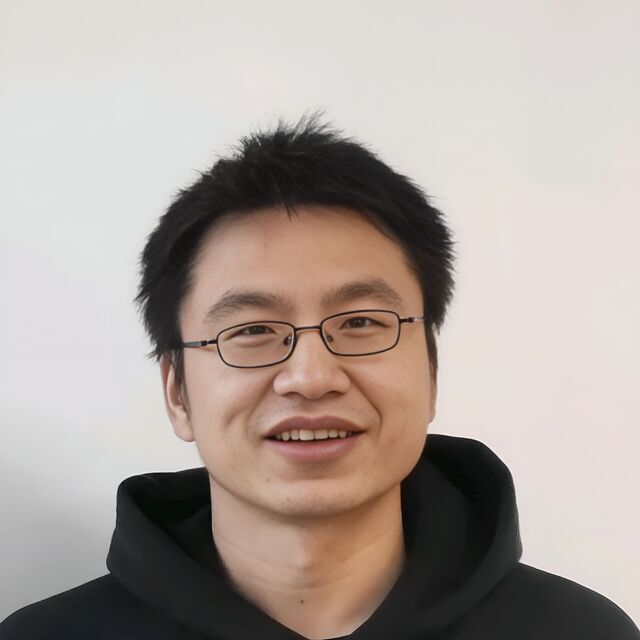
Elbert Dockery

Elbert Dockery is a software engineer, worked at several aerospace and defense companies as well as small startups. He has experience with systems software as well embedded systems.
Wednesday September 16, 2026 09:00 - 10:00 MDT
_5

14:00 MDT

In Pursuit of a 6,000 FPS Game Boy Emulator
Wednesday September 16, 2026 14:00 - 15:00 MDT
How far can modern C++ push an emulator before performance stops being a C++ problem and becomes a systems problem? This talk is the final part of a CppCon trilogy about building an extremely fast Game Boy emulator in modern C++, moving from high-performance emulation techniques to the limits imposed by hardware, compilers, and CPU architecture.

The target is intentionally absurd but not arbitrary: a Game Boy emulator running Tetris at roughly 100 times original speed, about 6,000 frames per second. However, the goal is not to support every Game Boy cartridge ever made. This project deliberately specializes for one iconic game first, using the code paths Tetris actually exercises as a guide, while keeping enough design discipline to test other games later. That means questioning the architecture of the emulator itself: instruction dispatch, memory access, generated code size, cache behavior, branch prediction, compile-time computation, benchmarking methodology, and the tension between accuracy, maintainability, flexibility, and raw throughput.

This is not a victory-lap performance talk. It is a measurement-driven engineering investigation. Rather than treating 6,000 FPS as just a headline number, this talk treats it as a stress test: a way to force difficult design decisions into the open. Attendees will leave with concrete lessons about performance-oriented C++: how to measure methodically, how to specialize without losing control, how to reason about modern CPU behavior, and how to decide when an optimization is worth its cost.

Presenters
avatar for Tom Tesch

Tom Tesch

Lecturer, DAE - Howest
Tom is currently a senior lecturer for the Bachelor in Digital Arts and Entertainment at Howest University of Applied Sciences, where he is on a mission to inspire the next generation of game developers. His expertise revolves around teaching C++, algorithms, and the core principles... Read More →
Wednesday September 16, 2026 14:00 - 15:00 MDT
_5

15:15 MDT

You Shall Not Pass*!
Wednesday September 16, 2026 15:15 - 16:15 MDT
Sean Parent's "no raw pointers" guideline is often misunderstood as "avoid T* , use smart pointers instead", even though Sean explicitly included smart pointers in his definition of a raw pointer: "anything with implied ownership and reference semantics".

This talk presents a refinement of that guideline:

Pointers - smart or not - shall not appear in function signatures, neither as argument nor as return type.

The focus of this talk is how to implement classes as regular types while still supporting dynamic allocation, polymorphism, and sharing internally.

It shows how such value types can be implemented manually, without dedicated library support. It then follows the evolution of the language and library in gradually simplifying these abstractions: C++11 smart pointers ( unique_ptr and shared_ptr ), C++26 vocabulary types ( indirect and polymorphic ), as well as in-progress proposals ( copy_on_write and protocol ) are presented as tools to simplify writing safe abstractions, not as safe abstractions themselves.

Along the way, the talk revisits the Rules of 3/5/0, exception safety guidelines, const propagation, aliasing, and local reasoning.

The talk aims to make you stop passing pointers around.

Presenters
avatar for Daniel Pfeifer

Daniel Pfeifer

Senior Software Engineer, Apple
Wednesday September 16, 2026 15:15 - 16:15 MDT
_5

16:45 MDT

Modern C++ Techniques to Reduce Boilerplate Without Sacrificing Performance
Wednesday September 16, 2026 16:45 - 17:45 MDT
Modern C++ gives developers powerful tools to write cleaner, safer, and more expressive code — but many production codebases still suffer from excessive boilerplate, repetitive patterns, and verbose implementations inherited from older C++ styles.

This talk explores practical modern C++ techniques that significantly reduce lines of code while preserving readability, maintainability, and runtime performance.

Through real-world examples, we will refactor traditional C++ implementations using features such as ranges, structured bindings, constexpr, concepts, CTAD, lambdas, std::optional, std::variant, and std::expected. We will examine where these features genuinely improve code quality — and where they can accidentally hurt clarity or performance if misused.

The session also goes beyond syntax improvements by analyzing generated assembly, compiler optimizations, allocations, and benchmark results to validate whether “shorter” code truly remains zero-cost.

Attendees will leave with practical patterns they can immediately apply to modernize existing codebases, reduce unnecessary complexity, and write more expressive C++ without sacrificing performance.

Presenters
avatar for VISHNU G NATH

VISHNU G NATH

Seasoned software developer with over 7 years of experience specializing in modern C++ development across industrial automation, semiconductor manufacturing, and enterprise systems. He currently works as a Technical Lead Software at Applied Materials, where he architects and implements... Read More →
Wednesday September 16, 2026 16:45 - 17:45 MDT
_5
 
Share Modal

Share this link via

Or copy link

Filter sessions
Apply filters to sessions.
Filtered by Date -