Loading…
Subject: Future C++ clear filter
arrow_back View All Dates
Friday, September 18
 

09:00 MDT

The Next 20 Weeks of Systems Engineering
Friday September 18, 2026 09:00 - 10:00 MDT
For a long time, programming was constrained by our ability to produce code. That constraint is eroding rapidly. AI systems can now generate substantial amounts of code with little effort, while inspection, validation, and integration remain difficult.

This transition alters the economics of software engineering. Code is becoming easier to generate than to reason about, and sound judgment grows scarcer relative to specialized intelligence. The emphasis shifts from authoring programs to understanding systems: their structure, invariants, interactions, and long-term evolution.

The talk examines this transition through the lenses of history, language design, and recent developments in AI and metaprogramming. It argues that the central challenges ahead concern not code generation, but the management of complexity at scale.

Topics include: - historical parallels and failed predictions in computing - AI-assisted software development - language design and metaprogramming - C++ reflection and compile-time programming - abstraction as context compression - complexity management in large systems

AI will undoubtedly transform how we build software. As before, the decisive factor will be our capacity to adapt.

Presenters
avatar for Andrei Alexandrescu

Andrei Alexandrescu

Principal Research Scientist, NVIDIA
Andrei Alexandrescu is a Principal Research Scientist at NVIDIA. He wrote three best-selling books on programming (Modern C++ Design, C++ Coding Standards, and The D Programming Language) and numerous articles and papers on wide-ranging topics from programming to language design to... Read More →
Friday September 18, 2026 09:00 - 10:00 MDT
Colorado B

10:30 MDT

What can C++26 reflection do for you?: A practical experiment in using reflection with an emphasis on binary protocol support
Friday September 18, 2026 10:30 - 11:30 MDT
How far can C++26 reflection take us? What are some techniques, gotchas, limitations and workarounds? How would reflection help write code that interacts with bespoke binary data formats? Come along as we explore a practical example together.

This talk will review advice gleaned from applying C++26 reflection to binary (structs on a wire) protocol handling. This type of protocol exists all around the world from financial market data formats to custom hardware interaction. Is the proposed reflection support enough to take a protocol definition written in the native terms of C++ and create flexible components to interact with that protocol?

Presenters
avatar for Andy Webber

Andy Webber

Technologist, Susquehanna
My name is Andy Webber and I work at Susquhanna which is a financial trading company near Philadelphia, PA. I started learning C++ in high school and I’ve been hooked ever since. I especially enjoy attempting to understand the full stack from the hardware up through high-level... Read More →
Friday September 18, 2026 10:30 - 11:30 MDT
Colorado A

10:30 MDT

IEEE 754 Decimals for C++: The Boost.Decimal Library
Friday September 18, 2026 10:30 - 11:30 MDT
Why does 0.1 + 0.2 not equal 0.3? Because binary floating-point cannot exactly represent most decimal fractions, the value 0.1 simply does not exist in IEEE 754 binary. For applications where rounding errors are unacceptable, finance, billing, regulatory reporting, scientific data interchange, this is a structural problem, not a precision setting that can be tuned away. IEEE 754-2008 introduced a decimal floating-point alternative that stores the significand in base 10, and ISO/IEC TR 24733 sketched a C++ binding for it. Compiler support, however, has remained uneven across vendors and architectures.

Boost.Decimal is a header-only, dependency-free, C++14 implementation of IEEE 754-2008 and TR 24733 decimal floating-point. It provides three IEEE-conformant types, decimal32 t, decimal64 t, and decimal128 t, and three companion decimal fast* t types that trade strict bit-layout conformance for speed where you don't need on-the-wire interoperability. All six types behave like built-in floating-point: they're constexpr-friendly throughout, support mixed arithmetic and promotion, and ship with their own implementations of , , , , , hashing, , and Boost.Math integration. The library is tested natively on x86 64, ARM64, and s390x, and under emulation on PPC64LE and ARM Cortex-M.

This talk is the introduction to decimal floating-point that most C++ programmers never got. We'll cover what decimal floating-point actually is at the bit level (BID vs. DPD encodings, the cohort concept that has no analogue in binary), why the standard library's defaults are what they are (e.g. Rounding), and how Boost.Decimal's API maps onto familiar and patterns. We'll work through worked examples, parsing a price feed, computing financial summary statistics through Boost.Math, round-tripping values through while preserving cohort information, and walk through the library's deliberate deviations from both IEEE 754 and the C++ standard, including why floating-point exception flags were sacrificed to keep constexpr and how from_chars was extended to distinguish overflow from underflow as well as preserve cohorts. We'll close with reviews of the benchmarks versus binary floating point, as well as other existing libraries.

By the end, attendees will know when reaching for decimal is the right call, which of the six types fits their workload, and what trade-offs the library made on their behalf.

Presenters
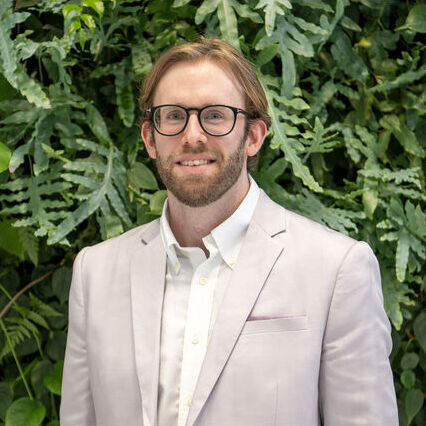
avatar for Matt Borland

Matt Borland

Staff Engineer, The C++ Alliance
Matt Borland earned his bachelor's from the University of Michigan and his master's from the Georgia Institute of Technology, and is currently a doctoral candidate in Electrical and Computer Engineering at Purdue University. He is the author of Boost.Charconv and Boost.Decimal, both... Read More →

Friday September 18, 2026 10:30 - 11:30 MDT
Red Rock 8/9

13:30 MDT

The Real Story of C++26: Beyond the Headline Features
Friday September 18, 2026 13:30 - 14:30 MDT
C++26 is often defined by its headline features — reflection, contracts, and senders/receivers. But those don’t tell the whole story.

In this talk, we’ll look beyond the headlines to explore the changes that more accurately reflect where C++ is heading. While less visible, these features address long-standing pain points, improve consistency, and quietly reshape everyday programming in C++.

We'll examine the continued expansion of constexpr, including the ability to throw exceptions at compile time, and what it means for the boundary between compile-time and runtime. We'll also discuss the evolving model of erroneous behavior and indeterminate values, making it more explicit what constitutes incorrect code — and how implementations can reason about it.

Safety is also becoming a stronger focus in the standard library. With the introduction of library hardening, C++26 takes steps toward making incorrect usage easier to detect and harder to ignore, without sacrificing performance.

Along the way, we'll look at improvements to function wrappers with std::function_ref and std::copyable_function , enhancements to structured bindings, and the growing capabilities of std::format . We'll also cover pack indexing and its impact on template expressiveness, as well as the ongoing expansion of the freestanding library.

Rather than focusing on individual features in isolation, this talk connects them into a broader narrative: the real direction of C++26 — toward greater clarity, expressiveness, and safety in everyday code.

Presenters
avatar for Sandor Dargo

Sandor Dargo

Software Developer, Spotify
Sandor is a passionate software developer focusing on reducing the maintenance costs by developing, applying and enforcing clean code standards. His other core activity is knowledge sharing both oral and written, within and outside of his employer. When not reading or writing, he... Read More →
Friday September 18, 2026 13:30 - 14:30 MDT
Red Rock 6/7

13:30 MDT

Implementing Async RAII
Friday September 18, 2026 13:30 - 14:30 MDT
C++ lifetime management is fundamentally built around synchronous scope exit. Constructors establish invariants, destructors release resources, and RAII permits ownership and cleanup to compose naturally with ordinary control flow. Asynchronous systems disrupt this model. Destruction may itself require asynchronous work, and “just launch another task in the destructor” quickly turns deterministic lifetime management into unstructured background activity.

This talk explores the implementation of async lifetime management in std::execution, based on the enter/exit scope sender framework proposed in P3955. Rather than treating async construction and destruction as special cases, the model reframes them as composable asynchronous protocols built around explicit async scope entry and exit operations. The talk follows the process of turning these ideas into working code, beginning from the low-level enter/exit sender abstractions and progressively assembling higher-level lifetime facilities on top. Along the way, the implementation uncovers an important self-similarity in the problem domain: Higher-level async lifetime facilities can themselves be expressed in terms of the same lower-level async lifetime primitives.

The implementation discussion focuses on the machinery required to make these guarantees real: Coordinating async teardown within structured concurrency, managing partially-entered scopes, and preserving deterministic cleanup semantics even when destruction itself becomes asynchronous. The resulting design serves both as a practical exploration of async lifetime management and as a case study in how implementing an abstraction can reveal deeper structural properties hiding inside the model itself.

Presenters
avatar for Robert Leahy

Robert Leahy

Robert Leahy is a C++ systems engineer specializing in the design of C++ libraries and high-performance infrastructure. Over the past decade he has built latency-sensitive financial systems, contributed to patented database technology, and developed production software for processing... Read More →
Friday September 18, 2026 13:30 - 14:30 MDT
Willow Lake 3/4/5
 
Share Modal

Share this link via

Or copy link

Filter sessions
Apply filters to sessions.
Filtered by Date -