Loading…
Venue: Willow Lake 3/4/5 clear filter
arrow_back View All Dates
Friday, September 18
 

09:00 MDT

Code Like a Library Author: How to Write Better C++ Application Code
Friday September 18, 2026 09:00 - 10:00 MDT
To write the best C++ application code, you must think like a library author. This talk reframes application development as a form of library design, where every component is a potential asset for future maintenance and extension.

We'll survey the C++ language features that empower library authors to create powerful, flexible, and safe abstractions. From there, we'll distill the 'library author mindset.’ You will leave with concrete principles and techniques to make your application code more modular, maintainable, composable, reusable, testable, and ultimately, more valuable.

Presenters
avatar for Jon Kalb

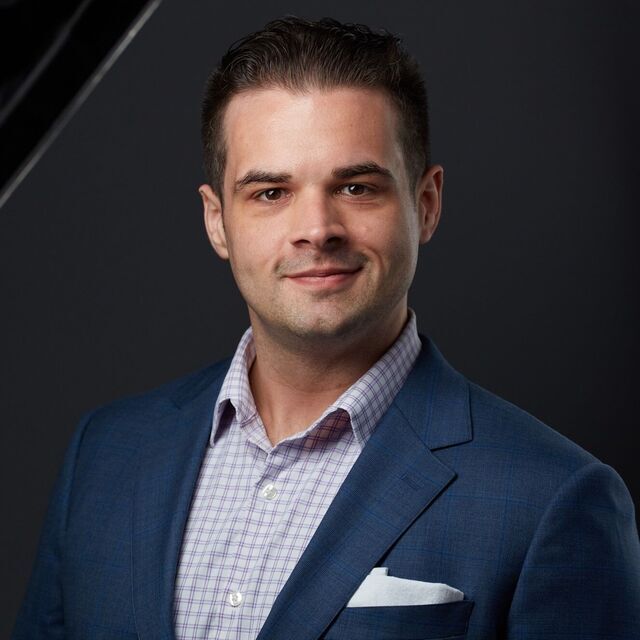
Jon Kalb

CppCon, Conference Chair, Jon Kalb, Consulting
Jon Kalb is using his decades of software engineering experience and knowledge about C++ to make other people better software engineers. He trains experienced software engineers to be better programmers. He presents at and helps run technical conferences and local user groups.

Jon is passionate about quality code and wants to inspire others to achieve their best engineering work. He is excited about modern C++ and how we can exploit the latest hardware developments with standard, portable C... Read More →
Friday September 18, 2026 09:00 - 10:00 MDT
Willow Lake 3/4/5

10:30 MDT

Incremental Modernization: Refactoring Legacy OOP Application Code using Type Erasure and Functional C++
Friday September 18, 2026 10:30 - 11:30 MDT
As legacy C++ codebases evolve to meet new requirements, fix architectural issues, and address performance bottlenecks, refactoring becomes inevitable — but full rewrites are risky, costly, and rarely practical. This talk explores how modern C++ features — especially functional programming techniques and type erasure — can be used to refactor and extend legacy systems. We will present a concrete, low-risk, and measurable four-step technical framework for incremental modernization, by leveraging pure functions, discriminated union types, and type-erased callables to achieve safer, more flexible code with compile-time guarantees, even in traditionally object-oriented codebases.

The core of the talk will walk through the entire process on a concrete code example, illustrating (1) how to isolate existing logic, (2) define safer data models using immutable types, (3) deploy type erasure to create a robust, non-disruptive adapter boundary between old and new code, and (4) measurably execute the migration with safe testing practices. We will also share lessons learned from real-world experience and conclude by showing how these foundational patterns can be extended into future-thinking designs, leveraging examples with accepted C++26 features. Every step is grounded in real production constraints and trade-offs, and the techniques transfer directly to any domain where full rewrites are not an option. Attendees will walk away equipped with practical strategies to incrementally refactor your legacy systems without sacrificing stability or velocity.

Presenters
avatar for Jessica Ding

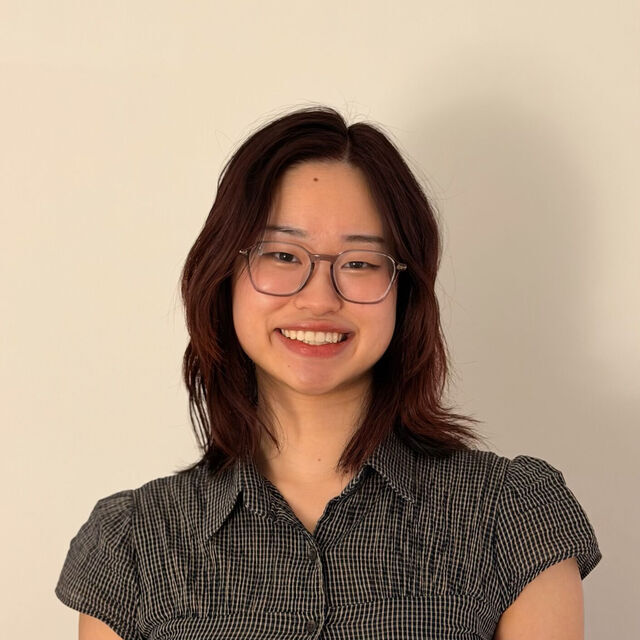
Jessica Ding

Jessica Ding is a software engineer at Bloomberg, where she develops and maintains robust, high-performance trading and order management solutions that enable efficient execution, monitoring, and management of complex orders across global markets. Jessica earned her bachelor’s and... Read More →

Friday September 18, 2026 10:30 - 11:30 MDT
Willow Lake 3/4/5

13:30 MDT

Implementing Async RAII
Friday September 18, 2026 13:30 - 14:30 MDT
C++ lifetime management is fundamentally built around synchronous scope exit. Constructors establish invariants, destructors release resources, and RAII permits ownership and cleanup to compose naturally with ordinary control flow. Asynchronous systems disrupt this model. Destruction may itself require asynchronous work, and “just launch another task in the destructor” quickly turns deterministic lifetime management into unstructured background activity.

This talk explores the implementation of async lifetime management in std::execution, based on the enter/exit scope sender framework proposed in P3955. Rather than treating async construction and destruction as special cases, the model reframes them as composable asynchronous protocols built around explicit async scope entry and exit operations. The talk follows the process of turning these ideas into working code, beginning from the low-level enter/exit sender abstractions and progressively assembling higher-level lifetime facilities on top. Along the way, the implementation uncovers an important self-similarity in the problem domain: Higher-level async lifetime facilities can themselves be expressed in terms of the same lower-level async lifetime primitives.

The implementation discussion focuses on the machinery required to make these guarantees real: Coordinating async teardown within structured concurrency, managing partially-entered scopes, and preserving deterministic cleanup semantics even when destruction itself becomes asynchronous. The resulting design serves both as a practical exploration of async lifetime management and as a case study in how implementing an abstraction can reveal deeper structural properties hiding inside the model itself.

Presenters
avatar for Robert Leahy

Robert Leahy

Robert Leahy is a C++ systems engineer specializing in the design of C++ libraries and high-performance infrastructure. Over the past decade he has built latency-sensitive financial systems, contributed to patented database technology, and developed production software for processing... Read More →
Friday September 18, 2026 13:30 - 14:30 MDT
Willow Lake 3/4/5

14:45 MDT

Back to Basics: C++20 Concepts
Friday September 18, 2026 14:45 - 15:45 MDT
In this talk we will explore "Concepts," a powerful feature for expressing template requirements added in C++20. Participants will learn how concepts improve code readability, provide clearer compiler diagnostics, and help enforce correct usage of templates and function overloading. Through simple, hands-on examples, we will explore the syntax, common use cases, and best practices for integrating concepts into modern C++ code. By the end of the session, attendees will understand how to write safer, more maintainable template code and leverage concepts to communicate intent clearly.

Presenters
avatar for Amir Kirsh

Amir Kirsh

Teacher, Academic College of Tel-Aviv-Yaffo
Amir Kirsh is a C++ lecturer at the Academic College of Tel-Aviv-Yaffo and Tel-Aviv University, previously the Chief Programmer at Comverse, after being CTO and VP R&D at a startup acquired by Comverse. Amir is also co-organizer of the annual Core C++ conference and the Core C++ meetup... Read More →
Friday September 18, 2026 14:45 - 15:45 MDT
Willow Lake 3/4/5
 
Share Modal

Share this link via

Or copy link

Filter sessions
Apply filters to sessions.
Filtered by Date -